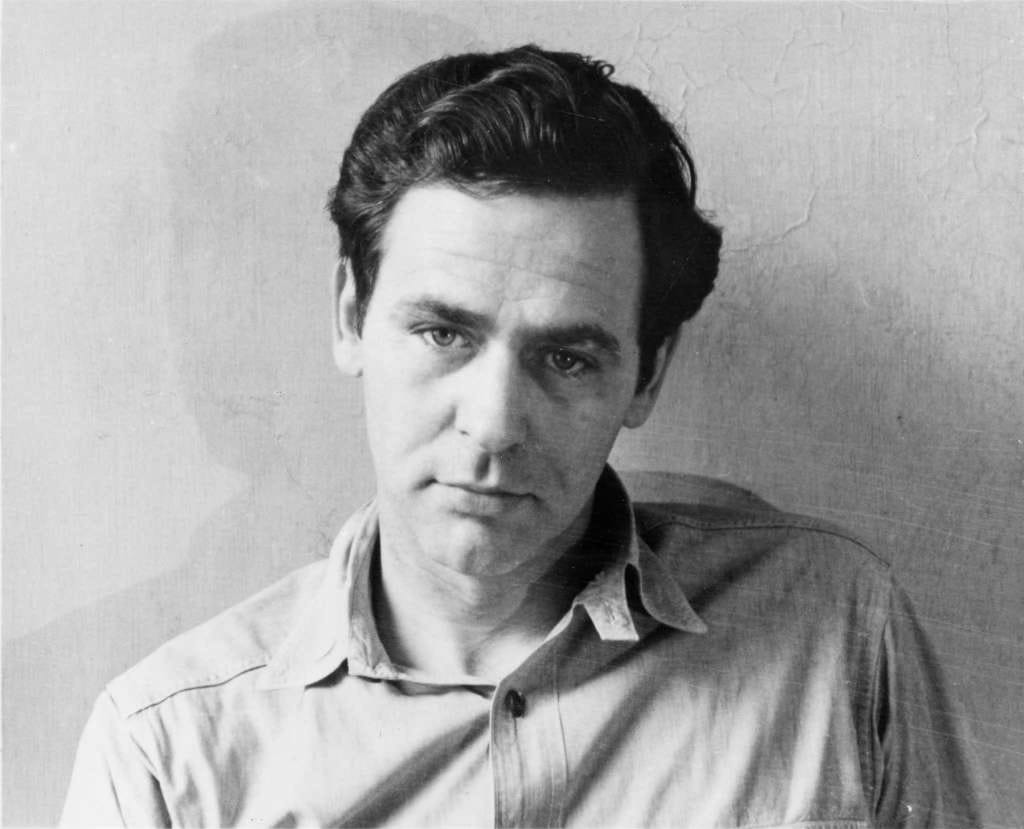
I know James Agee has been a topic of discussion frequently in class, and selecting him to discuss may seem like a cop out, but I have a lot to say about Agee. Coles finds Agee to be so important as a documentarian and a storyteller, to the point where he introduces him on page two of the introduction to this text. Furthermore, Agee’s experiences documenting the strife of the deep south during the Great Depression are referenced almost constantly throughout the rest of the introduction.
The topic of location as described by Coles is, as we know very well by now, way more than the physical setting of a documented event. As I understand it, location as Coles expresses it is more of a contextual setting that informs everything about a given person, place, situation, or thing. Agee’s documentary work in the deep south is a textbook example of location being used in documentary, and really helped me understand what it means in this context.
Agee grew up in Tennessee during the early 20th century, though he was fairly well off as he attended boarding schools growing up. Jim Crow laws were in place, which at first thought makes you think that the situation in the deep south would not be foreign to him. However, when you again consider his financial status, it is very possible that his exposure to the horrors being experienced by African Americans at the time was extremely limited. When his likely lack of exposure to diversity is considered, it’s not difficult to understand the self scrutiny that Coles talks about in the introduction.
Agee’s writings made me consider how different our respective locations are. Politically, socially, and economically, the world is in a completely different place today than it was during Agee’s time. As I mentioned in class, Agee’s profuse apologies to the people of the deep south who he scared are almost pitiful in the context of today’s society. He was horrified by the deep south because he had never seen it before, whereas today, we are almost always exposed to such atrocities through digital media.
Leave a Reply